Educational funding for low-income students is crucial as it provides necessary resources and support, ensuring equal opportunities and enhancing academic success through programs like Pell Grants and community partnerships.
Educational funding for low-income students plays a critical role in shaping opportunities and futures. Have you considered how essential this support is for leveling the playing field in education? Let’s dive into this important topic.
Understanding educational funding sources
Understanding the various sources of educational funding is crucial for supporting low-income students. Funding comes from multiple avenues, helping to bridge the gap in educational opportunities.
Types of Funding Sources
There are several key types of funding that support education:
- Federal Government: Programs such as Pell Grants and Title I funds provide crucial financial support.
- State Funding: Each state allocates funds based on its budget and educational needs.
- Local Taxes: Local governments often fund education through property taxes, which can lead to disparities.
- Private Funding: Donations from private organizations and individuals also play a role in funding schools.
Understanding these sources helps clarify how funds are distributed among schools. Each type brings its own set of advantages and challenges. For example, while federal funding gives a safety net, it often comes with strict requirements.
The Importance of Diverse Funding
Relying on a single source can create problems. When funding only comes from local taxes, disparities may arise, leaving low-income schools at a disadvantage. It’s essential to have a mix of funding sources.
Having a diverse funding base not only provides stability but also increases educational equity. Schools can better serve their students when funds come from various channels. Additionally, community support can mobilize resources and advocate for more equitable funding practices.
Challenges faced by low-income students
Low-income students face significant challenges that can affect their educational experience. These obstacles often create barriers to their success, making it harder for them to reach their full potential.
Financial Barriers
Many low-income students struggle with financial problems. They may have difficulty affording necessary supplies. Tuition fees and even basic costs for transportation can add stress. Some students may even have to work part-time jobs to help support their families.
Moreover, financial aid can be complicated and not all students receive the support they need. The uncertainty around funding causes anxiety, leading students to worry about their future.
Access to Resources
Another major challenge is the lack of access to educational resources. In some areas, schools lack quality teachers and up-to-date materials. Students may not have access to technology like computers or the internet.
This can hinder their ability to complete assignments or conduct research. Those who are already at a disadvantage struggle even more when proper resources are unavailable.
Social and Emotional Challenges
Low-income students often experience social and emotional difficulties. They may deal with feelings of isolation or low self-esteem due to their financial situation. Peer pressure can also make them feel left out when they can’t afford the same activities as others.
It’s crucial for schools to recognize these challenges to create supportive environments. Programs that address mental health and social integration can make a significant difference in the lives of these students.
Benefits of increased funding
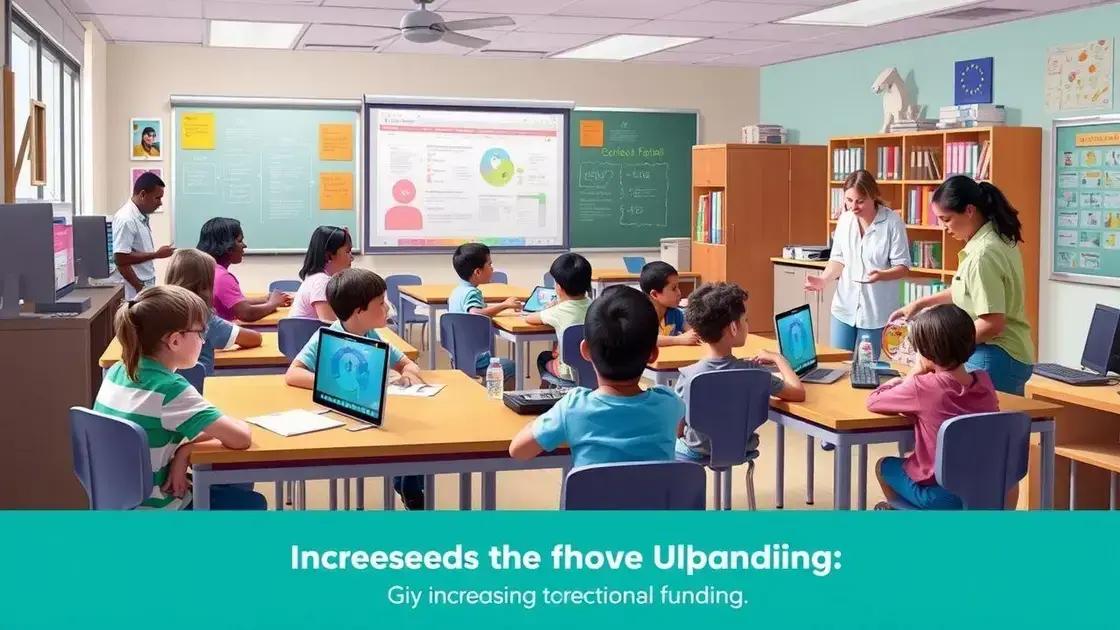
Increased funding for education, especially for low-income students, brings numerous benefits that can positively impact their performance and future. More resources can lead to improved educational outcomes and brighter prospects.
Enhanced Learning Environment
With increased funds, schools can create a better learning environment. Class sizes tend to decrease, allowing teachers to focus more on individual students. This personalized attention can lead to greater academic achievement.
Additionally, schools can invest in advanced technology and resources that make learning more engaging. For instance, smart boards and interactive software can enhance the classroom experience.
Access to Extracurricular Activities
More funding also enables schools to offer a wide range of extracurricular activities. These programs play a vital role in student development, helping them explore interests outside academics.
- Sports teams foster teamwork and discipline.
- Arts programs encourage creativity and self-expression.
- Clubs and organizations promote leadership skills and social interaction.
Students involved in these activities often show better engagement in school, improving their overall educational experience.
Improved Support Services
Increased funding leads to enhanced support services for students. More resources can fund tutoring programs, mental health support, and counseling services. These additional supports are especially beneficial for low-income students who may face significant challenges.
By addressing educational and emotional needs, students can thrive and feel more secure in their academic journey. This holistic approach helps level the playing field and fosters a positive school culture.
Examples of successful funding programs
There are numerous successful funding programs that have effectively supported low-income students, providing them with the resources they need to succeed. These programs help illustrate the impact that targeted funding can have.
Pell Grants
The Pell Grant program is one of the largest sources of federal financial aid for low-income students. This grant helps cover tuition and related expenses, allowing students to focus on their studies rather than financial burdens.
By providing funds that do not need to be repaid, Pell Grants open doors for many who might otherwise drop out due to financial stress.
Title I Funding
Title I is a component of the Elementary and Secondary Education Act (ESEA) that provides federal funds to low-income schools. The program aims to ensure that students receive a quality education, regardless of their background.
Schools use these funds to hire additional teachers, provide professional development, and create after-school programs that cater to at-risk students.
- Improved resources for struggling schools.
- Direct support for teachers and students.
- Programs to help with reading and math skills.
Community Partnerships
Community partnerships also play a crucial role in funding education. Local organizations often collaborate with schools to develop programs that provide scholarships, mentorship, and additional resources.
For instance, some nonprofits offer after-school tutoring and college readiness programs that help students transition from high school to higher education.
These collaborative efforts not only increase funding but also build strong support networks for students.
How to advocate for better funding
Advocating for better funding for low-income students is crucial for ensuring they receive the support they need to succeed. There are effective strategies that individuals and communities can use to influence funding decisions.
Understand the Funding Process
The first step in advocating for better funding is to understand how the funding process works. Familiarize yourself with local, state, and federal funding sources. Knowing how funds are allocated and spent can illuminate areas where improvements are necessary.
Engaging with the school board or local education officials can provide insight into current funding levels and challenges. This knowledge helps to frame advocacy efforts more effectively.
Build a Coalition
It’s important to connect with others who share the same goals. Building a coalition can amplify your voice. When more individuals unite for a common cause, lawmakers are more likely to pay attention.
- Reach out to parents, teachers, and community leaders.
- Engage local nonprofits and advocacy groups.
- Organize meetings and workshops to brainstorm approaches.
By working together, you can create a stronger advocacy movement.
Communicate Your Message
Effective communication is key to successful advocacy. Create clear, concise messages that outline the need for increased funding. Use data and personal stories to demonstrate the real impact of funding on students’ lives. Sharing these stories creates a human connection that can motivate action.
Utilize various platforms such as social media, local news outlets, and community meetings to spread your message widely. Engaging in conversations with local representatives about funding issues can further strengthen the cause.
FAQ – Frequently Asked Questions about Educational Funding for Low-Income Students
What is the Pell Grant?
The Pell Grant is a federal financial aid program that provides funds to low-income students, which do not need to be repaid, making education more accessible.
How can I get involved in advocating for better funding?
You can get involved by connecting with local education groups, attending school board meetings, and communicating with representatives about the need for increased funding.
What role do community partnerships play in educational funding?
Community partnerships can provide additional resources, support programs, and scholarships, enhancing the educational opportunities available for low-income students.
Why is understanding the funding process important?
Understanding the funding process helps advocates identify gaps and areas that need improvement, allowing them to make informed, effective requests for additional resources.