The current status of Roe v. Wade indicates a significant ongoing debate over reproductive rights, with varying state laws and shifting public opinion shaping future access to abortion services.
The current status of Roe v. Wade is a hot topic that impacts many lives. What does this mean for reproductive rights today? Let’s dive into the ongoing debates and legal battles.
Historical context of Roe v. Wade
The historical context of Roe v. Wade is essential for understanding its impact on reproductive rights. This landmark decision was made by the U.S. Supreme Court in 1973.
The ruling established a woman’s right to choose abortion, recognizing it as part of the right to privacy under the 14th Amendment. This decision did not happen overnight; it was the result of decades of activism by women and various organizations.
Pre-Roe Activism and Legal Battles
Before Roe v. Wade, many states had strict laws banning abortion. Women faced numerous challenges and dangers when trying to seek safe medical care. Despite this, activists fought tirelessly for reproductive rights.
- Grassroots movements began in the 1960s.
- Legal cases challenged existing laws.
- Public awareness of unsafe abortions grew.
- Organizations, like the National Organization for Women, advocated for change.
These efforts laid the groundwork for the significant Supreme Court case. By the time the court was ready to hear Roe, public opinion was shifting, reflecting a growing understanding of women’s rights and health.
Key Events Leading to the Decision
A few vital moments helped shape the legal landscape:
- The 1965 Griswold v. Connecticut case established the right to privacy.
- The feminist movement gained momentum and visibility.
- State laws began facing legal challenges.
These developments contributed to the Supreme Court’s willingness to hear Roe’s case. The decision has had lasting effects, sparking ongoing debates about women’s rights and bodily autonomy.
Understanding the historical context of Roe v. Wade reveals how far we’ve come, but also how much work remains. This decision continues to influence public policy and societal attitudes toward reproductive rights.
Current legal challenges facing Roe v. Wade
The current legal challenges facing Roe v. Wade highlight the ongoing debate over reproductive rights in the United States. Over the past few years, several states have enacted laws that directly challenge the precedents set by Roe, drawing national attention to the issue.
Many of these laws are designed to restrict access to abortion services. They often target specific procedures or place onerous requirements on clinics. Understanding these challenges is essential for recognizing the shifting landscape of reproductive health care.
Types of Legal Challenges
Legal challenges often come in various forms, including:
- **Trigger laws** that ban abortion if Roe is overturned.
- **Gestational limits** that reduce the timeframe for legal abortions.
- **Mandatory waiting periods** and counseling requirements for women seeking abortions.
- **Restrictions on medication abortions** that limit access to essential medications.
As court cases move through the judicial system, they can lead to significant changes in how reproductive rights are interpreted. Court decisions in recent years have shown that the judicial landscape can shift quickly, creating uncertainty and fear for many.
Impact of State Legislation
The impact of state-level legislation goes beyond local communities. It creates a patchwork of rules that can confuse and endanger women’s health. In some states, laws are becoming so restrictive that women may need to travel hundreds of miles to find accessible care. This disparity highlights the importance of legal battles at the federal level.
Many advocacy groups are actively fighting against these legal challenges. They work to ensure that women’s rights remain protected and to provide support for those affected by restrictive laws. This ongoing fight also emphasizes the need for awareness and education about reproductive rights.
By tracking the current legal challenges facing Roe v. Wade, we can better understand the future of reproductive health care in the United States. It is clear that these challenges will continue to shape the landscape for women across the nation.
Impact of state laws on reproductive rights
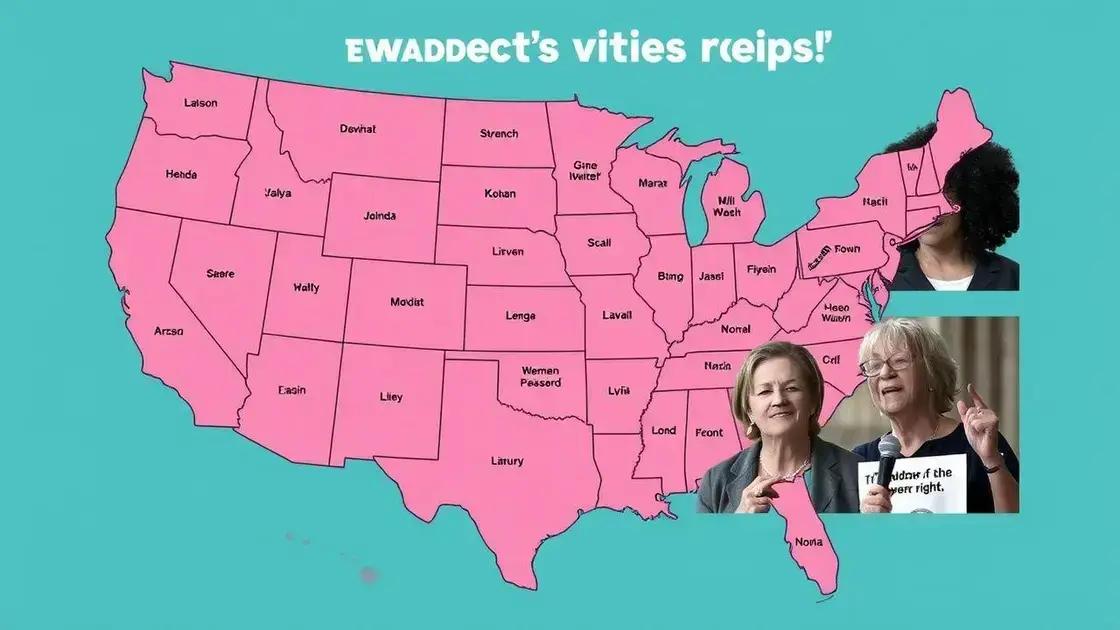
The impact of state laws on reproductive rights is profound and far-reaching. Different states have enacted various laws that can significantly affect access to abortion and other reproductive health services. Understanding these implications is crucial for anyone following the evolution of women’s rights in the United States.
Some states have chosen to implement stricter laws, limiting access to abortion services through various measures. These laws can include waiting periods, mandatory counseling, and even complete bans on certain procedures. The result is a complex web of regulations that varies widely from one state to another.
State Variation in Abortion Access
Access to abortion services is not uniform across the country. This variation can be seen clearly in:
- Trigger laws that go into effect to ban abortion if Roe v. Wade is overturned.
- Resource availability, such as the number of clinics per state.
- Geographic barriers that make it difficult for women in rural areas to access care.
- Health and safety regulations that complicate clinic operations.
These factors contribute to significant disparities in reproductive health care. Women in stricter states may find themselves facing barriers that can delay or prevent them from receiving necessary medical services.
Consequences of Restrictive Laws
Restrictive laws can have severe consequences. In some states, women must travel long distances, sometimes hundreds of miles, to find a clinic that provides legal abortion services. This can lead to:
- **Increased costs** associated with travel and accommodations.
- **Psychological stress** due to the added pressure and logistics.
- **Delays in receiving care**, which can impact health outcomes.
The ripple effects of these laws impact not just individuals but entire communities. When reproductive rights are restricted, public health can be affected, leading to broader social and economic implications.
Advocacy groups are working hard to address these inequalities. They push for policies that protect reproductive rights and provide support to women facing challenges due to state laws. The fight for equitable access to reproductive health care continues to be a critical focus for many organizations.
Public opinion on Roe v. Wade
Public opinion on Roe v. Wade plays a vital role in shaping the conversation around reproductive rights in America. Over the years, attitudes toward abortion have evolved, influenced by cultural, political, and personal factors.
Surveys and polls show that many people have varied perspectives on this topic. Understanding these views is important to grasp how they impact legislation and community dialogue.
Survey Insights
Recent surveys reveal significant insights into public beliefs regarding Roe v. Wade:
- A majority of Americans support the right to choose an abortion.
- Concerns about women’s health and autonomy frequently drive opinions.
- Many people favor some regulations, like mandatory waiting periods, but oppose outright bans.
- Generational differences show younger individuals tend to support reproductive rights more than older generations.
This data reflects how public sentiment can shift depending on current events. For instance, high-profile court cases or changes in state laws can influence individual viewpoints and galvanize activism.
Factors Influencing Opinions
Several factors contribute to shaping public opinion on reproductive rights:
- Educational background, where people with higher education levels often support Roe v. Wade.
- Religious beliefs can strongly dictate perceptions on abortion, with varying stances across different faiths.
- Personal experiences, such as those related to pregnancy and family planning.
Understanding these influences showcases the complexity of the issue. Public debates can become heated, but it’s crucial to recognize personal stories and perspectives that drive opinions.
As discussions continue regarding Roe v. Wade, public opinion remains a powerful force. Advocates on both sides of the issue strive to sway perceptions and protect their views on women’s reproductive rights.
Future considerations for reproductive rights
The future considerations for reproductive rights are shaped by ongoing legal battles, shifting public opinion, and emerging social movements. As debates around Roe v. Wade continue, it’s essential to look ahead at what might influence the landscape of reproductive health.
Many believe that changes in legislation and societal values could lead to either more protections or further restrictions. Understanding these potential shifts helps us grasp how reproductive rights may evolve in the years to come.
Legal Trends on the Horizon
As various states introduce new laws, several legal trends are emerging:
- Increased state-level legislation could further restrict abortion access in certain areas.
- Potential federal responses from Congress may arise to protect or limit reproductive rights based on the political climate.
- Judicial appointments play a critical role in shaping future rulings on reproductive health.
- State court cases may also set precedents that influence national discussions.
These trends reflect how dynamically the legal aspects of reproductive rights are changing, indicating that the situation remains fluid.
Shifts in Public Opinion
Public sentiment continues to shift, with younger generations often holding more progressive views on reproductive rights. Surveys indicate that support for access to abortion may grow in response to restrictive laws.
Increased involvement in advocacy and more conversations surrounding women’s health might drive this change further. Activists are utilizing social media and community engagement to inform and mobilize supporters.
The Role of Technology
Advancements in medical technology also influence the future of reproductive rights. For instance, telemedicine has opened doors for consultations and medication abortion access, especially in underserved areas.
As technology continues to develop, it may reshape how reproductive health services are delivered. This could lead to more options and greater accessibility for individuals seeking care.
Also, comprehensive sex education and access to contraception remain vital components of the conversation. Providing accurate information empowers individuals to make informed choices about their reproductive health.
FAQ – Questions About the Current Status of Roe v. Wade
What is Roe v. Wade?
Roe v. Wade is a landmark Supreme Court decision from 1973 that established a woman’s legal right to choose an abortion under the Constitution.
How are current state laws affecting access to abortion?
State laws vary widely, with some states implementing strict regulations that limit access to abortion services, while others protect reproductive rights.
What is the impact of public opinion on reproductive rights?
Public opinion influences legislative decisions and advocacy efforts, with many surveys indicating growing support for reproductive rights among younger generations.
What role does advocacy play in shaping reproductive rights?
Advocacy groups work tirelessly to raise awareness, educate the public, and influence policy changes to protect and expand reproductive rights.