The food stamp program, or SNAP, provides essential benefits to low-income individuals and families for purchasing food, helping to improve nutrition and food security across communities.
Food stamp program news is crucial for anyone relying on these benefits. It’s essential to stay updated on changes and improvements that can affect your access to food assistance. Are you aware of the latest news?
Overview of the food stamp program
The food stamp program offers vital assistance to millions of Americans. It aims to reduce hunger and improve nutrition for low-income families. By understanding the program, you can ensure you’re making the most of the benefits available to you.
What is the food stamp program?
This program, known officially as the Supplemental Nutrition Assistance Program (SNAP), provides eligible individuals with a monthly benefit to purchase food. Eligible households receive an Electronic Benefits Transfer (EBT) card that works like a debit card.
Eligibility requirements
To qualify, applicants must meet certain criteria related to income and household size. Here are some key eligibility points:
- Income cannot exceed 130% of the federal poverty level.
- Applicants must be U.S. citizens or meet specific immigration criteria.
- Work requirements may apply, depending on age and household situation.
Understanding these requirements can help you determine if you qualify for support. Each state manages its own program and eligibility assessments, so it is essential to check local guidelines.
How benefits are calculated
Benefits vary based on household size and income. Generally, larger households receive higher benefits. The Thrifty Food Plan is used to calculate the maximum benefits. This reflects a low-cost meal plan, determining how much assistance families need.
Are you curious about how to maximize your benefits? Many states provide resources to help families stretch their food dollars. Community programs often offer cooking classes and budgeting workshops.
Engaging with local food assistance programs can also help users gain additional benefits and support throughout the year. Knowing where to look is essential for making the most of your food assistance.
Recent changes to eligibility requirements
Recent changes to eligibility requirements for the food stamp program can significantly impact many families. Staying informed about these updates is crucial for those seeking assistance.
New income standards
The most notable change involves adjustments to the income limits that determine eligibility. These limits are reviewed annually and may increase to reflect the rising cost of living. Higher income thresholds mean that more families can qualify for benefits.
Changes in household composition rules
Another important update involves how households are defined. Previously, some individuals may have been excluded based on their living situation. Now, the rules have been amended to include more flexible definitions of who counts as a household member. This change aims to provide support to families that might otherwise slip through the cracks.
Impact of recent legislation
New legislations have also come into play, making adjustments to how benefits are calculated and distributed. Particularly, emergency allotments from the pandemic are being phased out, but this is balanced by new programs aimed at preserving food assistance for qualifying participants.
Many states are enhancing their outreach programs to ensure communities understand these changes and can benefit as intended. For example, local seminars and online resources are becoming more widely available. Engaging in these resources can help navigate the complexities of eligibility.
If you think you might qualify under the new guidelines, it’s wise to check your state’s SNAP office for the latest requirements and assistance options available to you.
How to apply for food stamp benefits
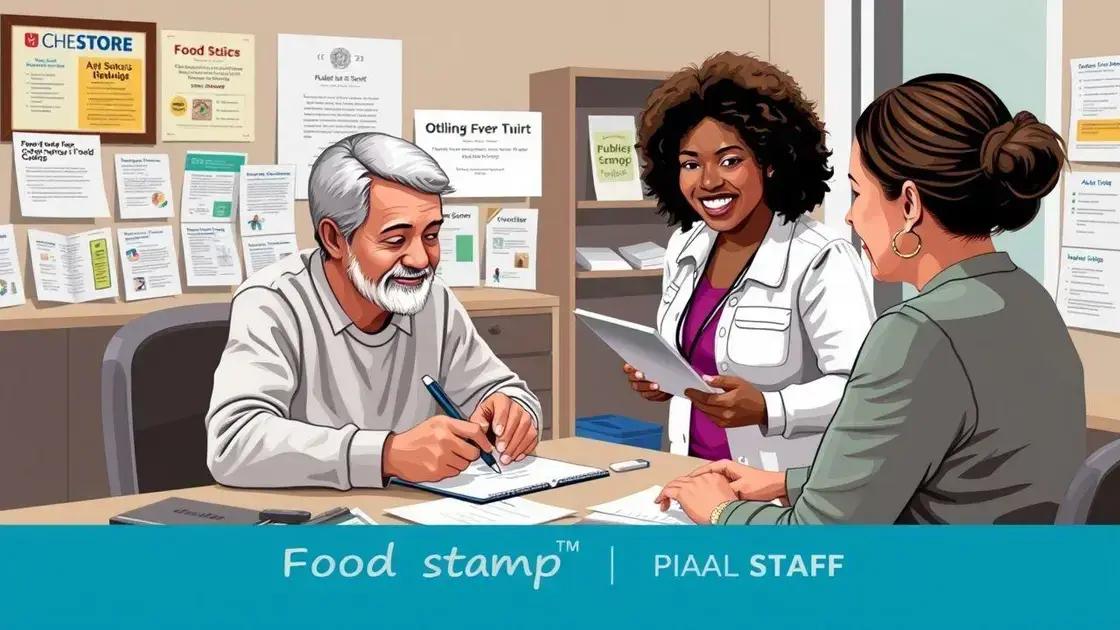
Understanding how to apply for food stamp benefits is crucial for families in need. The process may seem complex, but with the right steps, you can navigate it smoothly.
Gather required documents
Before applying, ensure you have all necessary documents ready. These usually include:
- Identification (like a driver’s license or passport).
- Proof of income (check stubs, tax returns).
- Household information (social security numbers of all members).
Having these documents organized can expedite your application process. It helps avoid delays that can occur from missing information.
Online application process
Many states offer an online application portal that simplifies the process. Here’s a typical flow:
- Visit your state’s SNAP website.
- Create an account or log in.
- Fill in the application form and upload your documents.
After submitting your application, you will receive confirmation and an estimated timeline for processing. It’s essential to check your email for updates.
In-person application options
If you prefer, you can apply in person at your local SNAP office. When doing so, consider:
- Scheduling an appointment to minimize wait times.
- Bringing all required documents with you.
- Asking questions if any part of the process is unclear.
This option allows for direct interaction with staff who can assist you in completing the application correctly.
After you submit your application, be prepared for an interview. This might happen over the phone or in person, where you will discuss your household’s situation in detail.
Finally, if approved, keep track of your benefits and know how to use your EBT card. It’s important to stay informed about potential changes in eligibility or benefits throughout the year.
Tips for maximizing your food stamp assistance
Knowing how to maximize your food stamp assistance can significantly impact your family’s food security. With just a few strategies, you can make your benefits last longer.
Plan your meals
Planning meals is a great way to save money and use your benefits effectively. By mapping out your meals for the week, you can buy only what you need. This prevents overbuying and reduces food waste.
Use local resources
Many communities offer resources to help you stretch your food dollars. Some effective options include:
- Food pantries that provide free groceries.
- Community gardens where you can grow your own produce.
- Cooking classes that teach budget-friendly meal prep.
These resources can help you get more food for your family without spending extra money.
Look for discounts and sales
Always be on the lookout for discounts at grocery stores. Many stores provide weekly ads or loyalty programs that can save you money. Use coupons and take advantage of sales, especially on items you frequently buy.
Purchasing items in bulk can also be a smart way to save. Just make sure to only buy what you can use before the food spoils.
Check for second-chance programs
Some states offer programs that assist families after they have exhausted their food stamp benefits. This includes supplemental assistance during tough times. The eligibility and details may vary by state, so it’s worth checking with your local SNAP office.
By applying these tips, you can better manage your food stamp benefits and ensure nutritious food is available for your household.
Community resources for food stamp recipients
Community resources play a vital role for food stamp recipients, providing additional support to enhance food security. These resources help bridge the gap, ensuring families have access to nutritious food and necessary services.
Local food banks
Many neighborhoods have food banks offering free groceries to families in need. Food banks often provide fresh produce, canned goods, and other essentials. To find one in your area, you can:
- Search online for local food banks.
- Contact your local SNAP office for recommendations.
- Ask community centers about available resources.
Visiting a food bank can supplement your food stamp benefits, allowing you to stretch your budget further.
Nutrition education programs
Several organizations offer nutrition education to help families make the most of their food. These programs teach skills such as:
- Meal planning on a budget.
- Understanding nutrition labels.
- Cooking healthy meals with available resources.
Gaining knowledge in these areas can empower families to choose healthier options and use their benefits effectively.
Community gardens
Community gardens are another fantastic resource. They provide families with opportunities to grow their own fruits and vegetables. Participating in these gardens allows recipients to learn about gardening while receiving fresh produce. Many communities offer workshops and support for beginners.
Trading produce with neighbors in community gardens can also foster a sense of community and shared resources. This not only creates access to healthy food but also builds connections among local residents.
If you are looking for ways to supplement your food stamp benefits, tap into community resources. By joining local programs, you can enhance your food access and learn valuable skills for your family’s nutrition.
In conclusion, accessing and utilizing the food stamp program can help families achieve food security and improve their nutrition. Whether you are looking to apply for benefits, understand eligibility requirements, or find community resources, there are many avenues to explore. By planning meals, utilizing local resources, and maximizing benefits, you can ensure your family has the support it needs. Remember, you are not alone in this journey; many resources are available to help you and your community thrive!
FAQ – Frequently Asked Questions about Food Stamp Program
What is the food stamp program?
The food stamp program, officially known as SNAP, provides eligible low-income individuals and families with monthly benefits to purchase food.
How can I apply for food stamp benefits?
You can apply for food stamp benefits online through your state’s SNAP website or in person at your local SNAP office.
What documents do I need to apply?
You typically need identification, proof of income, and household details like social security numbers of all members.
Are there community resources available for food stamp recipients?
Yes, there are many community resources such as food banks, nutrition programs, and community gardens that can help supplement your food assistance.