To improve credit score fast, consistently make timely payments, reduce credit utilization below 30%, correct errors on your credit report, and avoid applying for new credit too frequently.
Improve credit score fast seems like a dream, right? Many of us want that magical shortcut. Fortunately, there are practical steps you can take to see real changes. Interested in learning how to jump-start your credit journey?
Understanding credit scores and their impact
Understanding your credit score is essential. It impacts everything from loan approval to interest rates. A credit score is a three-digit number, typically ranging from 300 to 850, reflecting your creditworthiness. The higher the score, the better your chances of securing favorable financial products.
Your credit score is primarily influenced by several factors. Payment history, which makes up about 35% of your score, reflects whether you pay your bills on time. This is a crucial aspect since late payments can severely harm your score.
Factors Influencing Your Credit Score
Other factors include:
- Credit utilization affects around 30% of your score. This measures how much credit you are using compared to your total available credit.
- Length of credit history, accounting for 15%, looks at how long your accounts have been active. A longer history is usually more favorable.
- Types of credit, making up 10%, considers the variety of credit accounts, such as credit cards and loans. Having a mix can positively influence your score.
- New credit inquiries, contributing to the final 10%, reflect how many times you’ve sought new credit. Multiple applications can indicate risk to lenders.
Furthermore, understanding the implications of your credit score is key. A higher score can lead to lower interest rates and better loan terms. On the other hand, a low score might result in higher costs for loans or even denial of credit. Regularly checking your credit report helps you stay informed about your score and catch any errors.
Taking thoughtful steps to improve your score can create significant benefits. For example, reducing debt and making payments on time can enhance your score over time. Understanding what affects your credit score puts you in a position of control.
Top strategies to quickly improve credit score
Improving your credit score quickly is possible with the right strategies. It may seem overwhelming, but small changes can lead to big results. Understanding effective methods will empower you to take charge of your financial health.
One of the best ways to enhance your score is by paying your bills on time. Timely payments show lenders that you are responsible and can manage credit effectively. Additionally, reducing your credit utilization ratio can significantly boost your score. Aim to use less than 30% of your available credit. This means if you have a credit limit of $1,000, try to keep your balance under $300.
Strategies to Consider
There are several other strategies to consider:
- Check your credit report regularly for errors. Mistakes can negatively impact your score unnecessarily.
- Limit new credit inquiries. Each time you apply for credit, an inquiry appears on your report, which can lower your score.
- Diversify your credit types. Having different types of credit, such as both revolving credit (like credit cards) and installment loans (like car loans), can improve your score.
- Become an authorized user on someone else’s credit card account. This can add their positive payment history to your report.
Furthermore, consider negotiating with creditors to remove late payments. If you have a good payment history, explaining your situation might help you. Many creditors are willing to work with customers during hard times.
As you implement these strategies, be patient. Improving your credit score is a gradual process, but consistency is key. Celebrate small victories as you see your score rise. Each step will contribute to a brighter financial future.
Common mistakes that lower credit scores
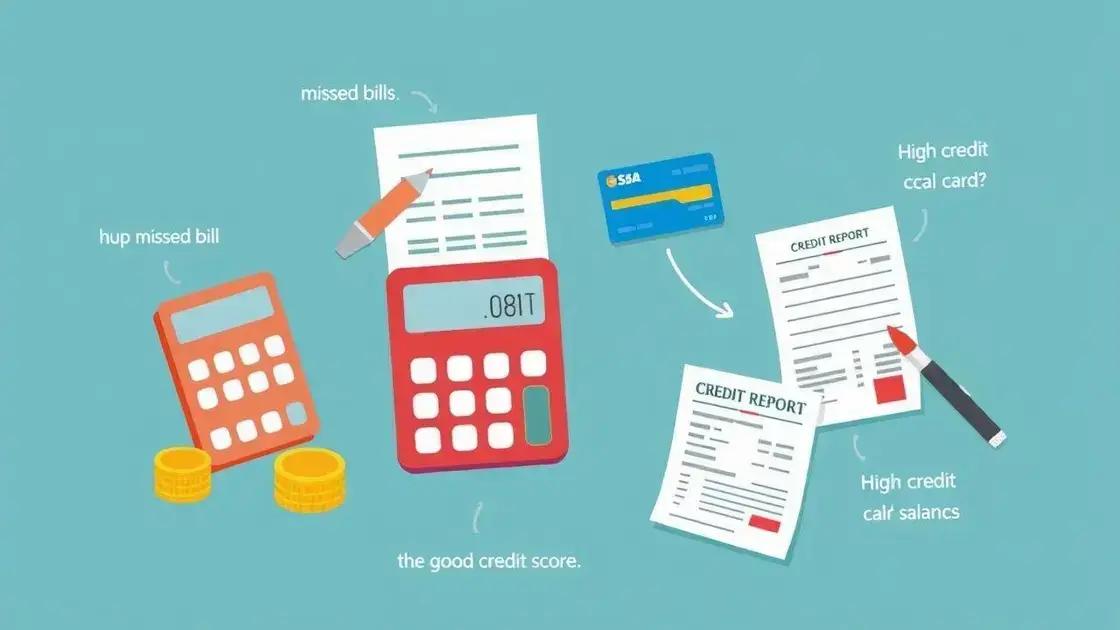
Many people unknowingly make mistakes that can lower their credit scores. Recognizing these pitfalls is crucial for maintaining good credit health. Understanding what not to do will help you avoid these common errors.
One of the biggest mistakes is missing payments. Late payments can stay on your credit report for up to seven years. This can significantly damage your score. Always pay on time to show that you are a responsible borrower. Setting up automatic payments or reminders can be a helpful strategy.
Other Mistakes to Avoid
Here are some other common mistakes:
- Using too much credit can harm your score. Aim to keep your credit utilization below 30% of your total available credit.
- Closing old credit accounts may seem logical, but it can actually shorten your credit history. Older accounts contribute positively to your credit score.
- Applying for multiple credit cards in a short time frame leads to many hard inquiries on your report, which can lower your score.
- Neglecting to check your credit report regularly can leave you unaware of errors or fraud. Make sure to review your report at least once a year.
Furthermore, ignoring creditors when they reach out can create problems. If you’re facing difficulty making payments, communicate with them. Often, they can help you set up a payment plan or other arrangements.
Being informed about these common mistakes allows you to take proactive measures. Making small adjustments in your financial habits can lead to a healthier credit score over time, improving your overall financial situation.
Monitoring your credit for ongoing improvements
Monitoring your credit is essential for continual improvement. Regularly checking your credit report helps you spot errors and track your progress. This practice enables you to understand how your financial decisions impact your score.
One effective way to monitor your credit is by using free credit monitoring services. These services provide alerts for changes in your credit report, helping you respond quickly to any issues. Some popular options include Credit Karma and Experian. Knowing your current score allows you to adjust your financial habits as needed.
Benefits of Regular Monitoring
Here are some benefits of keeping an eye on your credit:
- Identify errors that may be dragging down your score. Disputing inaccuracies can lead to a score boost.
- Track improvements and see how your efforts to pay off debt or make timely payments are affecting your score.
- Detect identity theft early, allowing you to take immediate action to protect your finances.
- Stay informed about factors influencing your score, helping you make more educated financial decisions.
Furthermore, creating a budget that allows for consistent payments will support your monitoring efforts. When you know what you owe and when it’s due, it’s easier to avoid late payments. Additionally, setting annual reminders to review your credit report keeps you accountable. You can obtain a free copy of your report from each of the three major credit bureaus once a year.
By actively monitoring your credit, you position yourself to seize opportunities for improvement. This proactive approach nurtures good financial habits, leading to a stronger credit profile over time.
Long-term habits for maintaining a good score
Maintaining a good credit score requires long-term habits and dedication. It’s not just about quick fixes; the goal is to create a sustainable approach to managing your credit. This will set you up for financial success over the years.
One of the best long-term habits is to consistently pay your bills on time. Even a single late payment can negatively impact your score. To avoid this, consider setting reminders or automating payments whenever possible. Being proactive about payments is a key strategy.
Essential Long-Term Habits
Here are some essential habits to develop for a healthy credit score:
- Keep old accounts open. The length of your credit history contributes to your score, so maintaining older accounts helps improve it.
- Limit new credit applications. Frequent inquiries can lower your score. Only apply for credit when necessary.
- Diversify your credit mix. Having a variety of credit types, like credit cards and loans, can show lenders you can manage different accounts well.
- Regularly review your credit report for errors and inaccuracies. Correcting mistakes can help maintain or improve your score.
Additionally, keep your credit utilization low. Aim to use less than 30% of your available credit limit. This shows lenders that you are not overly reliant on credit and can manage your finances responsibly. If possible, paying down debts will directly improve this ratio.
Building these habits takes time and patience, but over time, they will contribute to a strong and positive credit profile. By focusing on consistent, responsible behavior, you can maintain a good score and enjoy the benefits it brings, like lower interest rates and better loan options.
FAQ – Frequently Asked Questions about Improving Your Credit Score
How can I quickly improve my credit score?
To quickly improve your credit score, make timely payments, reduce your credit utilization, and correct errors on your credit report.
What are common mistakes that can lower my credit score?
Common mistakes include missing payments, using too much credit, and applying for multiple credit cards in a short time.
How often should I check my credit report?
You should check your credit report at least once a year to review for errors and track your credit score progress.
What are some long-term habits to maintain a good credit score?
Some long-term habits include paying bills on time, keeping old credit accounts open, and maintaining a diverse mix of credit types.