No-cost dental care includes free preventive and treatment services, accessible through local clinics, dental schools, and community health organizations, helping individuals maintain their oral health without financial burden.
No-cost dental care resources are available to help individuals maintain their oral health without the burden of high costs. Have you ever wondered where to find these services? Let’s dive into this important topic.
Understanding no-cost dental care
Understanding no-cost dental care can seem challenging, but it’s crucial for maintaining oral health. Many people may not know that various programs and services exist to help those in need. This section will discuss what no-cost dental care is and how to access it.
What is no-cost dental care?
No-cost dental care refers to services provided for free, ensuring everyone can access necessary treatment. High costs often prevent people from seeking care, but no-cost options help fill this gap. These services can include routine check-ups, cleanings, fillings, and sometimes even emergency procedures.
Benefits of no-cost dental services
Using no-cost dental care can lead to improved health and well-being. Here are some key benefits:
- Reduced financial stress, allowing you to maintain a healthier smile.
- Access to preventive care, helping to avoid more significant issues later.
- Support from experienced professionals committed to your oral health.
Many communities offer free dental clinics hosted by local health departments or dental schools. These clinics often provide low-income families with critical services without any charge. It’s important to research local resources to find which facilities are available in your area.
Private practices may also participate in programs that offer no-cost dental care. Be sure to ask your dentist if they take part in any assistance programs.
Overall, understanding no-cost dental care options empowers individuals to take control of their dental health. Don’t hesitate to reach out for help, as many resources are ready to support you on your journey to a healthy smile!
Types of no-cost dental services available
Understanding the various types of no-cost dental services available can help individuals make informed decisions about their oral health. Many clinics offer services at no charge, providing essential care for those in need. These services can vary widely, catering to different age groups and dental needs.
Preventive Services
Preventive care is crucial in maintaining oral health. Most no-cost dental programs include a range of preventive services such as:
- Regular check-ups to monitor dental health.
- Cleanings to prevent early signs of decay.
- X-rays to identify issues not visible to the naked eye.
These services aim to catch problems early, potentially saving costs in the long run.
Treatment Services
In addition to preventive care, many no-cost dental programs offer treatment options. These can include:
- Fillings for cavities to restore tooth function.
- Extractions for severely damaged teeth.
- Root canals to treat infections in the tooth pulp.
It’s essential to check with local clinics to see what specific treatments they offer.
Furthermore, some facilities may provide emergency services for urgent dental problems, ensuring that patients can receive care when they need it most. Many organizations recognize the importance of addressing dental emergencies without additional financial burden.
Overall, being aware of the types of no-cost dental services can empower individuals to seek out the care they need. Whether it’s through community health centers, dental schools, or nonprofit organizations, numerous options exist to help maintain oral health without financial strain.
How to find local no-cost dental care
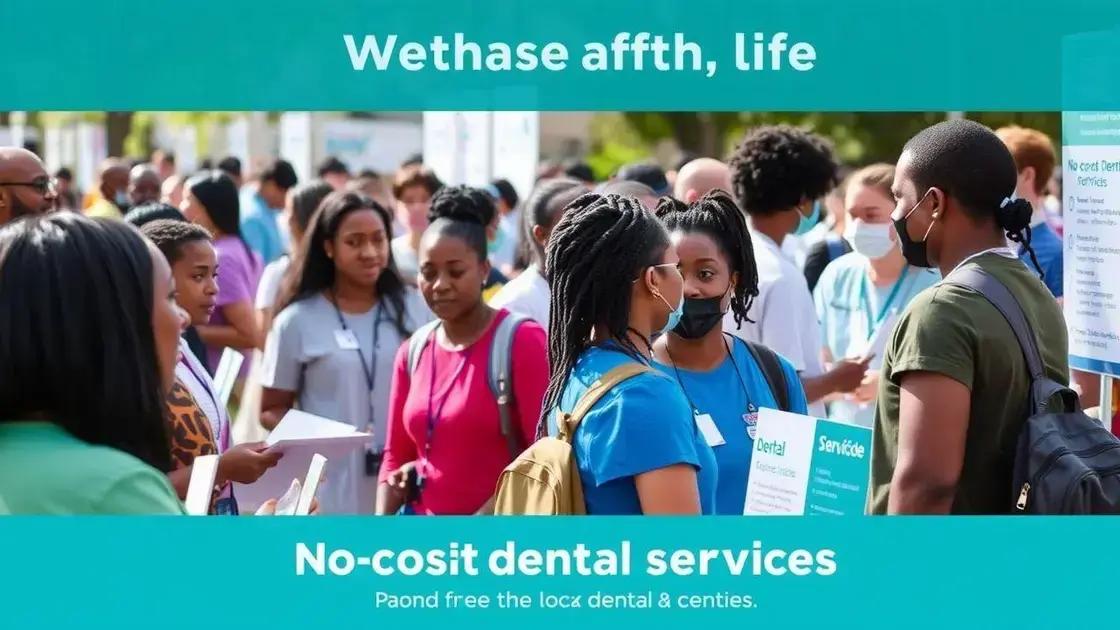 Finding local no-cost dental care can be easier than you think, and numerous resources are available to help. Many communities offer free services, but knowing where to look can make all the difference. Start by checking with local health departments, which often have information about available dental services.
Online Resources
The internet can be a valuable tool in your search for no-cost dental care. Many websites provide directories of free dental clinics, including:
- National Association of Dental Plans (NADP) which lists programs in different states.
- Dental schools that typically offer services at a lower cost or for free.
- Local nonprofit organizations dedicated to providing health services.
Using these resources can help you identify clinics in your area that fit your needs.
Community Outreach
Attending community health fairs can also be beneficial. Many local organizations provide information about free or low-cost dental clinics. This outreach often includes screenings, making it a perfect opportunity to gather information. Flyers distributed in community centers, schools, and libraries can also provide insights into available services.
In addition, reaching out to friends, family, or local social service organizations can yield valuable recommendations. Sometimes, personal connections can lead to discovering resources not readily advertised. Community boards and local social media groups can further help by sharing information about no-cost dental care options.
Eligibility requirements for free dental care
Eligibility for free dental care can vary widely depending on the program and location. Understanding these requirements is key to accessing the help you need when it comes to oral health. Many clinics and services have specific guidelines to ensure that the most vulnerable populations receive appropriate care.
Common Eligibility Criteria
Most **no-cost** dental programs have similar eligibility criteria that include:
- Income level: Many programs serve low-income families and individuals.
- Residency status: Some clinics may require you to be a resident of the specific area they serve.
- Age: Certain services may focus on children or seniors, providing age-specific care.
Understanding these criteria can help you identify which services to explore.
Documentation Needed
When applying for free dental care, you may be required to provide documentation. This can include:
- Proof of income, such as pay stubs or tax returns.
- Identification, such as a driver’s license or social security number.
- Proof of residency, like a utility bill or lease agreement.
These documents ensure that programs can effectively determine eligibility and cater to the right individuals.
It’s important to remember that many providers are eager to help, so don’t hesitate to reach out to local clinics. They can provide assistance and clarify specific eligibility requirements for their programs. The availability of free dental care means more people can keep their smiles healthy without the burden of high costs.
Tips for accessing no-cost dental resources
Accessing no-cost dental resources can be easier with some practical tips. Many people may overlook the services available to them, but knowing how to navigate these resources can lead to better oral health without the financial strain. Start by being proactive about your dental care needs.
Be Informed About Local Services
Understanding your community’s available options is crucial. Research local dental clinics that offer free services. Some good places to look are:
- Your local health department’s website.
- Community health centers that provide free or sliding scale services.
- Dental schools that offer treatment by students under supervision.
Utilizing these resources can help you find the right care.
Don’t Hesitate to Ask Questions
When seeking no-cost dental resources, always feel free to ask questions. Inquire about eligibility, available services, and what documentation you may need. Clinics are there to help, and they will appreciate your interest in understanding their services. Clear communication can also ease any worries you may have about the process.
In addition, consider reaching out to local charities and organizations. They often offer referrals and additional resources. Many nonprofits focus on health care access and can connect you with dental services.
Finally, keep an open mind and be persistent. Accessing no-cost dental resources may take some time and effort, but the rewards are significant. A healthy smile is worth the effort, and many people want to help you achieve it.
FAQ – Frequently Asked Questions About No-Cost Dental Care
What types of services are included in no-cost dental care?
No-cost dental care can include preventive services like cleanings, check-ups, and treatment services such as fillings and extractions.
How can I find local no-cost dental clinics?
You can find local no-cost dental clinics by checking with your local health department, researching online resources, or visiting community health fairs.
What are the eligibility requirements for free dental care?
Eligibility requirements can vary, but they often include income level, residency status, and age. It’s important to check specific criteria with the clinics.
What documents do I need to access no-cost dental resources?
You may need to provide proof of income, identification, and residency, such as pay stubs, a driver’s license, or a utility bill.